





An electrical installation certificate (boletín eléctrico, CIE) in Valencia costs between 100 and 180 € in 2026 if the installation already complies and only needs checking, signing off and registering. Increasing the power without any work costs 120-200 €, and if something has to be fixed before signing, it goes over 300 €. These are market prices, not our rates.
What moves the figure within that range is the state of your fuse box (cuadro eléctrico). The boletín is the most dreaded and least understood piece of paper in any move. People arrive in a hurry, because the electricity cannot be connected without it or because the buyer of the flat asks for it, and with two worries: how much it will cost and whether someone will sneak a full rewiring past them along the way.
Octo Service is a repair service in Valencia and l'Horta: you write to us, we agree the price before anyone starts, and the work is done by an independent professional who works with us. For the boletín, that professional is always an authorised installation company (empresa instaladora habilitada), because nobody else can sign it. Below is what the rules say, with links, and what the market charges.
What is the boletín eléctrico (CIE)?
The official name is low-voltage electrical installation certificate (certificado de instalación eléctrica de baja tensión), CIE for short. “Boletín” is what people have called it for decades.
It is a document in which an installation company certifies that your installation complies with the Low Voltage Electrotechnical Regulation (Reglamento Electrotécnico para Baja Tensión). Article 18 of the Regulation (Royal Decree 842/2002) makes it clear in three points:
- once the installation is finished and checked, the installation company issues the certificate;
- that certificate is lodged with the regional government to register the installation;
- the distribution company (distribuidora) cannot connect an installation unless it receives the copy of the certificate stamped by the regional government.
That is why there is no electricity connection without a boletín. It is not the company being fussy: it is the law.
In the Valencian Community (Comunitat Valenciana) registration is online. The installation company files it on the Generalitat's online portal, under the procedure for low-voltage installations with a technical design report (memoria técnica de diseño). That covers homes of up to 50 kW, which means every normal flat. Only a detached house of more than 50 kW needs a project signed by an engineer, according to ITC-BT-04 of the same Regulation.
How much does the boletín eléctrico cost in Valencia?
These are the ranges published for Valencia in 2026 by the Certificados Energéticos price guide, updated in February 2026. They are market figures, not our rates.
| Case | 2026 market range | What is included |
|---|---|---|
| Installation that already complies, check only | 100-180 € | visit, check, signing the CIE and registration |
| Power increase without work | 120-200 € | check and paperwork |
| New installation or home renovation | 150-300 € | the certificate as part of the job |
| Installation with minor fixes | over 300 € | depends on what needs fixing |
| Duplicate of an already registered boletín | 10.50 € | Generalitat fee in 2026, online procedure |
| Registering a new CIE with the Generalitat | the official procedure page lists no fee | ask whether it is included in the price |
Source: Certificados Energéticos boletín eléctrico price guide (February 2026) for the first four rows; the Generalitat's duplicates procedure page and low-voltage registration page for the last two.
The duplicate comes from the Generalitat's official duplicates procedure page, and here is the first tip that saves money: if your home already had a boletín, you may not need a new one, just a copy of the old one. You can look it up with the CUPS (supply point code) on your electricity bill, the file number or the previous holder's details.
Why does the same check cost 100 € in one place and 180 € in another? Because at the low end is the installer who sees the photo of the fuse box, confirms it is modern and does the visit in twenty minutes. At the high end, the one who has to test a four-bedroom flat circuit by circuit. The paper is the same. The work is not.
When do you need the boletín?
Four situations, from most to least common in Valencia:
Getting the electricity connected. A new flat, a flat with no contract for years or a supply that has been cut off. The distribution company needs the registered certificate to connect, as Article 18 of the Regulation says.
Increasing the power. Here the rules have a nuance. Article 93 of Royal Decree 1955/2000 says that if you ask for more power, the distribution company inspects the installation, and only if it does not comply does it require you to bring it up to standard and present a boletín. In practice, with an old installation that almost always ends in a boletín.
After electrical work. A new fuse box, new circuits, switching from single-phase to three-phase. Every new or modified installation ends with its certificate.
Selling or renting. Do not confuse it with the energy performance certificate: that is the one required to sell or rent, under Royal Decree 390/2021. The boletín is a different document. But the buyer or tenant will need it if the supply is cut off or if they want more power, which is why it often comes up in negotiations.
Does it expire after 20 years?
This is the most common question, so let's take it slowly.
The Regulation sets no expiry date for a home's certificate. The compulsory periodic inspections in ITC-BT-05 are every 5 years for installations that needed an initial inspection, such as premises open to the public, and every 10 years for the common areas of residential buildings over 100 kW. Your flat is not on that list.
The 20-year idea comes from what some distribution companies and electricity suppliers (comercializadoras) ask for when a contract changes. If you are asked for it, what matters is the real state of the installation, not the date on the old paper.
How it is done, step by step
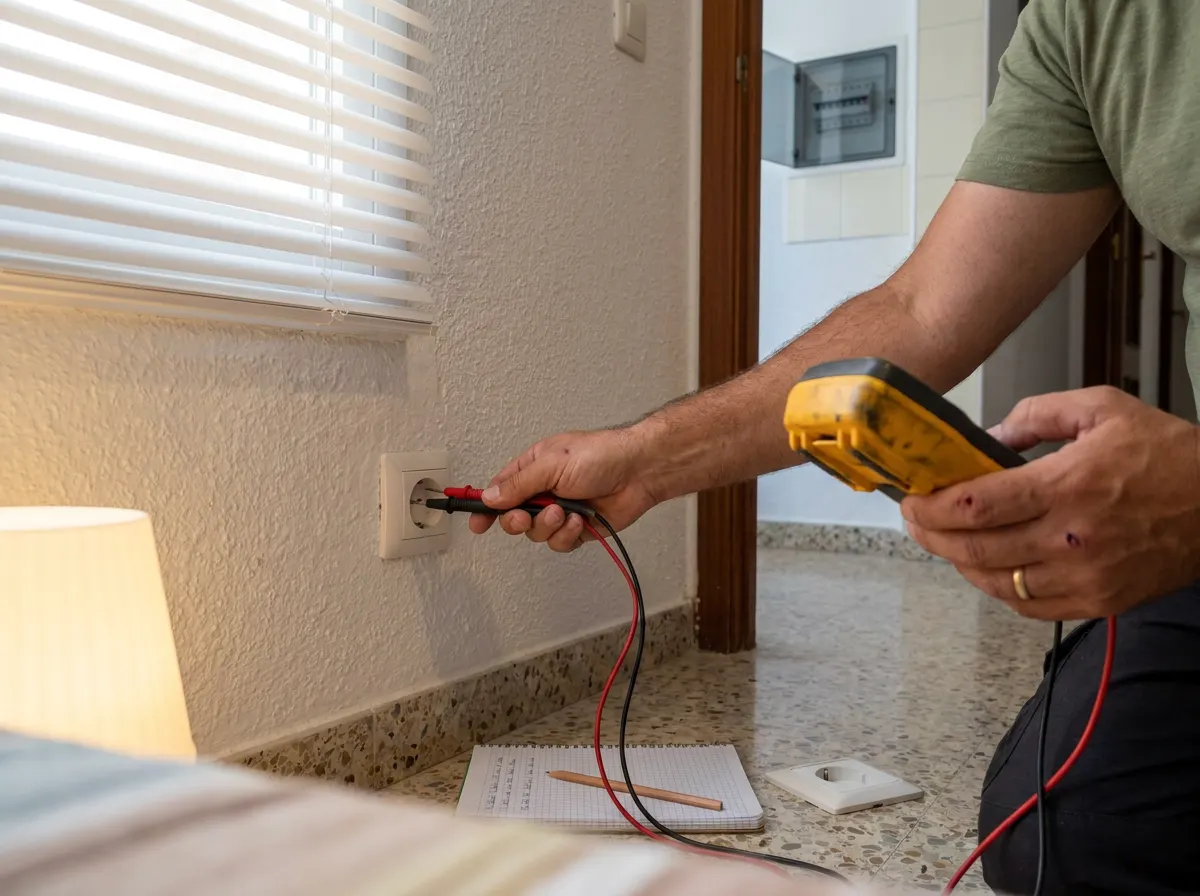
If everything is in order, the process is short:
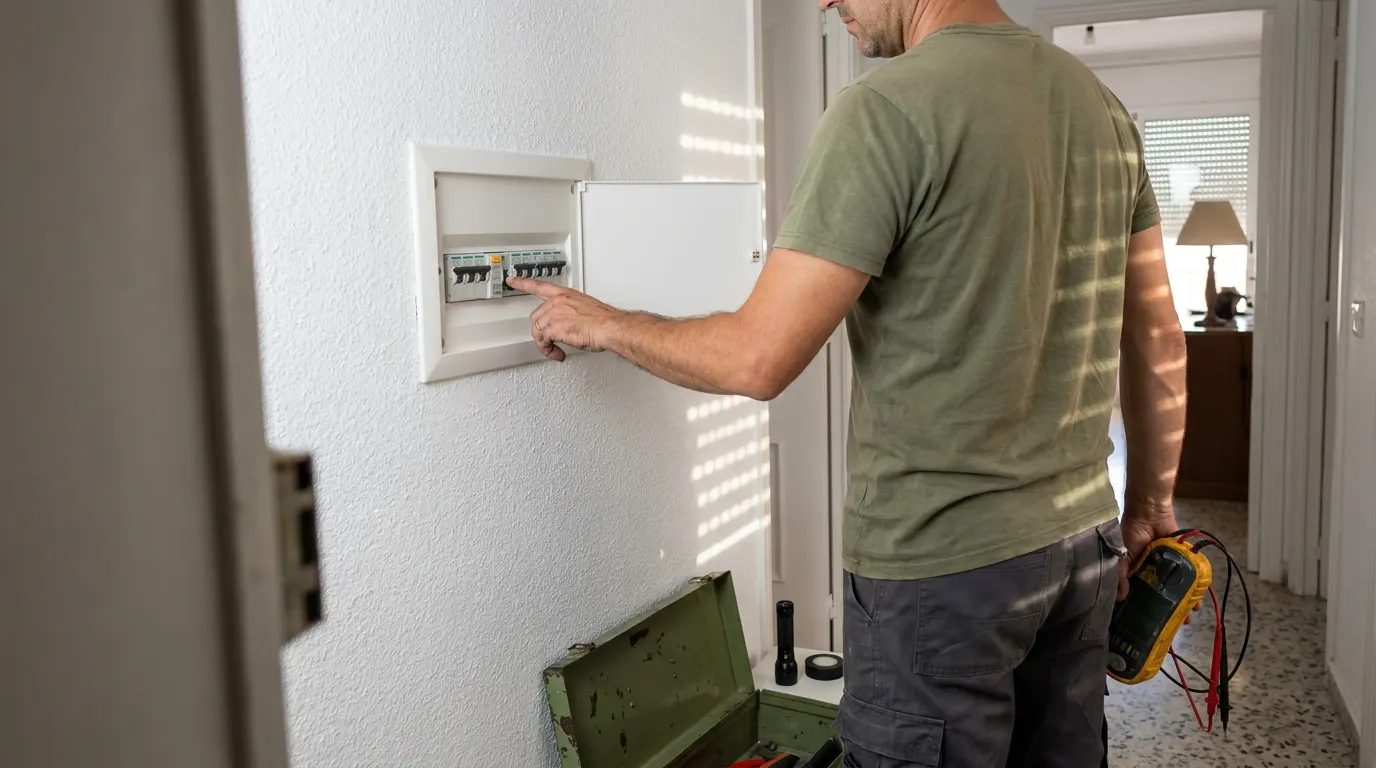
- Visit and check. The installation company looks at the fuse box, tests the RCD (diferencial), measures the earthing and checks the circuits. The Regulation calls these pre-commissioning checks.
- Technical design report. A document with the diagram of your installation, the power and the circuits. For a flat, the installation company prepares it itself.
- Signing and registration. The certificate and the report are filed online with the Generalitat.
- Delivery. You get the registered certificate as a PDF, and with it you arrange the connection or the change with your electricity supplier.
As for timing, the Certificados Energéticos guide talks about 24-48 hours to have the certificate if the installation passes, and up to 7 days for the distribution company to give the go-ahead.
What to have ready: an electricity bill with the CUPS (or the home's CUPS if the supply is cut off), your ID (DNI), the exact address and, if you can, the land registry reference (referencia catastral).
What if your installation fails?
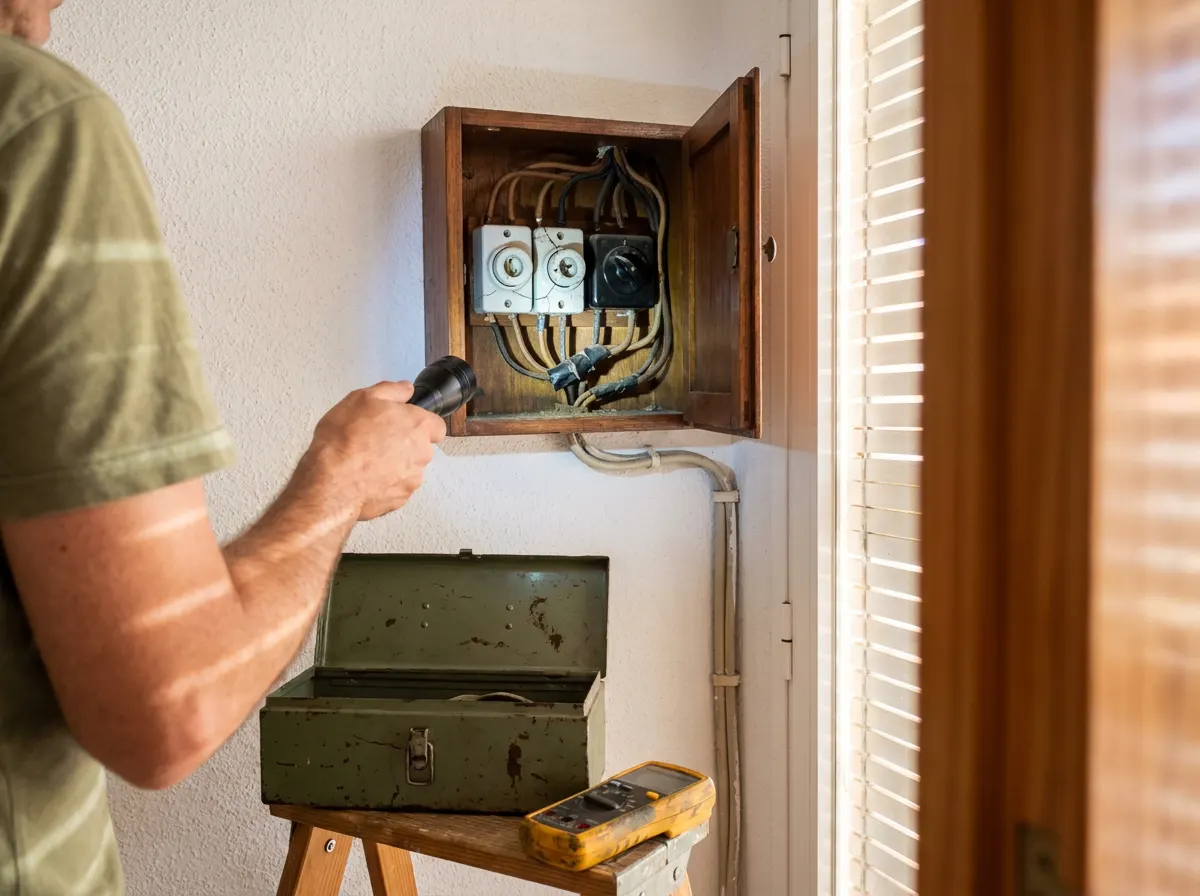
This is everyone's fear, and it is a reasonable one.
An installation company cannot sign the certificate for an installation that does not comply: by signing it, it certifies that it meets the Regulation and is liable for that. So if the check finds something, it has to tell you and quote for it before going on.
What usually turns up in flats with wiring that is forty or fifty years old:
- No RCD. It is the device that cuts the power if there is a leak to earth, and the one that saves you from a shock. Without it, there is no boletín.
- No earthing, or the sockets have the earth terminal but it is not connected to anything.
- Everything runs on a single circuit, with thin cables, and the oven, the washing machine and the air conditioning all compete for the same wire.
- Porcelain fuses instead of circuit breakers.
To give you an idea of what the Regulation asks for today: ITC-BT-10 states that a new home must allow for at least 5,750 W at 230 V, and 9,200 W if it has high electrification (air conditioning, electric heating or more than 160 m²). An installation from fifty years ago was not designed for that.
If the fix is minor (a new RCD in the fuse box, splitting a circuit), the “over 300 €” range in the table is realistic. If new cable has to be run through the whole home, we are no longer talking about a boletín but about rewiring, and the price is different. The sensible thing is to get the two figures separately: what it costs to fix and what it costs to certify.
Does your power trip often? It is the clearest sign that something will turn up in the check. Our “power keeps tripping” test helps you work out whether it is the RCD, an appliance or your contracted power (potencia contratada) before you call anyone.
Signs of a boletín you should avoid
Cheap certificates exist, and some are done properly. But there are three warning signs:
- They sign it without coming round. A certificate for an existing installation without anyone opening the fuse box is a piece of paper, not a check.
- They do not give you an installation company number. Ask for it. An authorised company has one and will give it to you without fuss.
- “VAT not included” and “registration not included”. Ask whether the price includes registration with the Generalitat and VAT (IVA). A boletín that is not registered is no use to the distribution company.
And a fourth one, the other way round: if, for a boletín, you are quoted a complete new installation from the start without anyone explaining what is wrong with yours, ask for the breakdown. What does not comply should fit in one line.
In Valencia and l'Horta
Across the whole Valencian Community the procedure is the same and belongs to the Generalitat, so nothing changes between Valencia city, Torrent or Paterna. What changes is the distribution company that connects you, which is not your electricity supplier: its name is on your electricity bill, and it is the one the certificate goes to.
If you are in Valencia or l'Horta and need the boletín, send us a photo of the open fuse box (cover off, without touching anything), another of the meter and a bill with the CUPS. With that we know whether the check will be quick or whether something needs fixing, and we give you a fixed price before anyone comes, usually in under 2 hours. The electrician in Valencia page has the rest of the electrical jobs, and what each one costs (hourly rate, fault, socket, light point) is in how much an electrician charges in Valencia.
Get your quote. Free, with no obligation.